AI tools are everywhere in 2026—but only a handful are actually worth your time. Some help you write faster, research smarter, and automate boring tasks. Others look impressive in demos and disappoint the moment you try them.
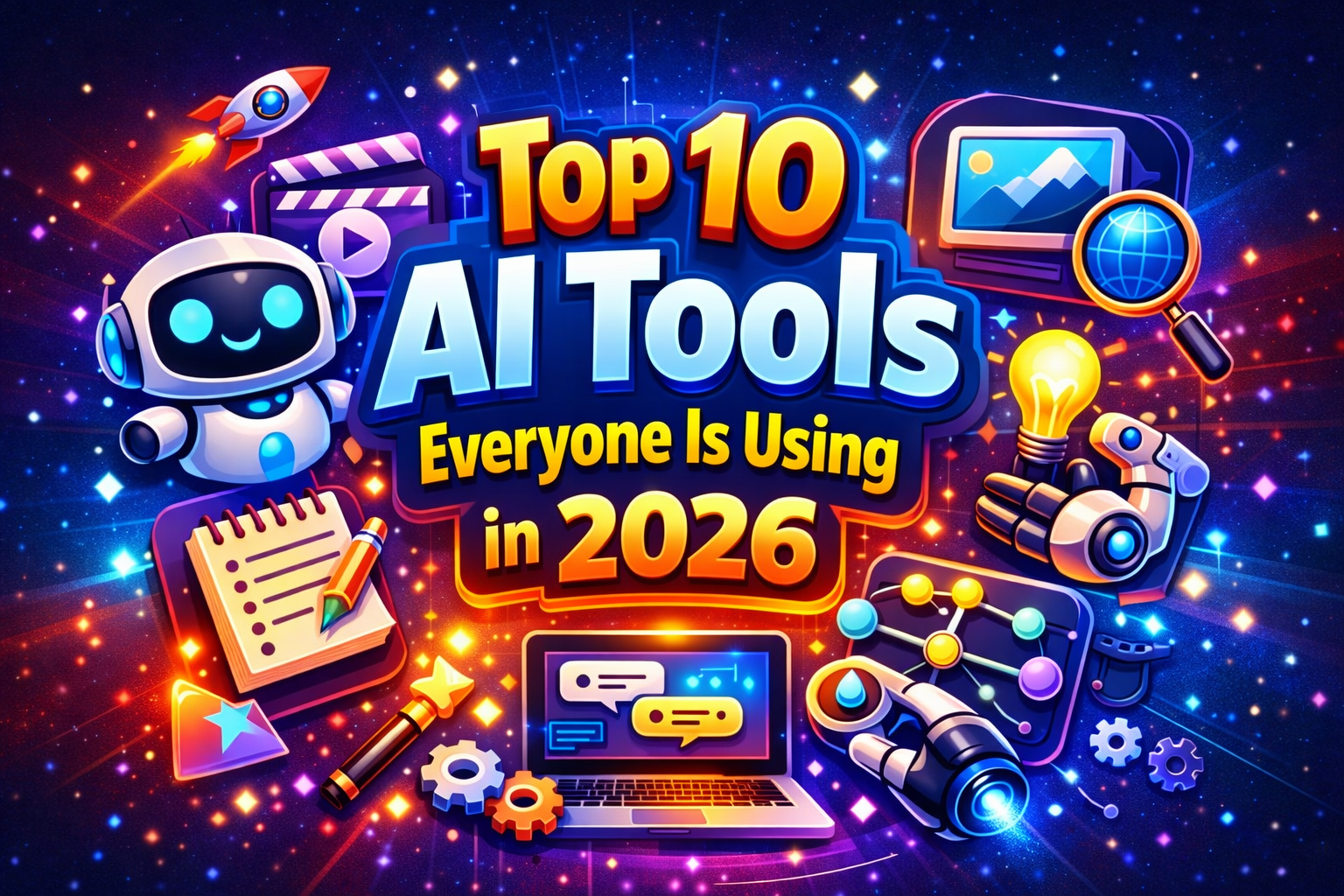
This guide is a practical, real-world list of the top 10 AI tools everyone is using in 2026. It’s designed for everyday users—students, freelancers, creators, marketers, and professionals—who want AI tools that genuinely improve productivity.
You’ll find what each tool does best, who it’s for, and how to use it without wasting hours testing random apps. If you’re trying to keep up with the AI wave, this is a strong place to start.
Table of Contents
- Why AI Tools Matter in 2026
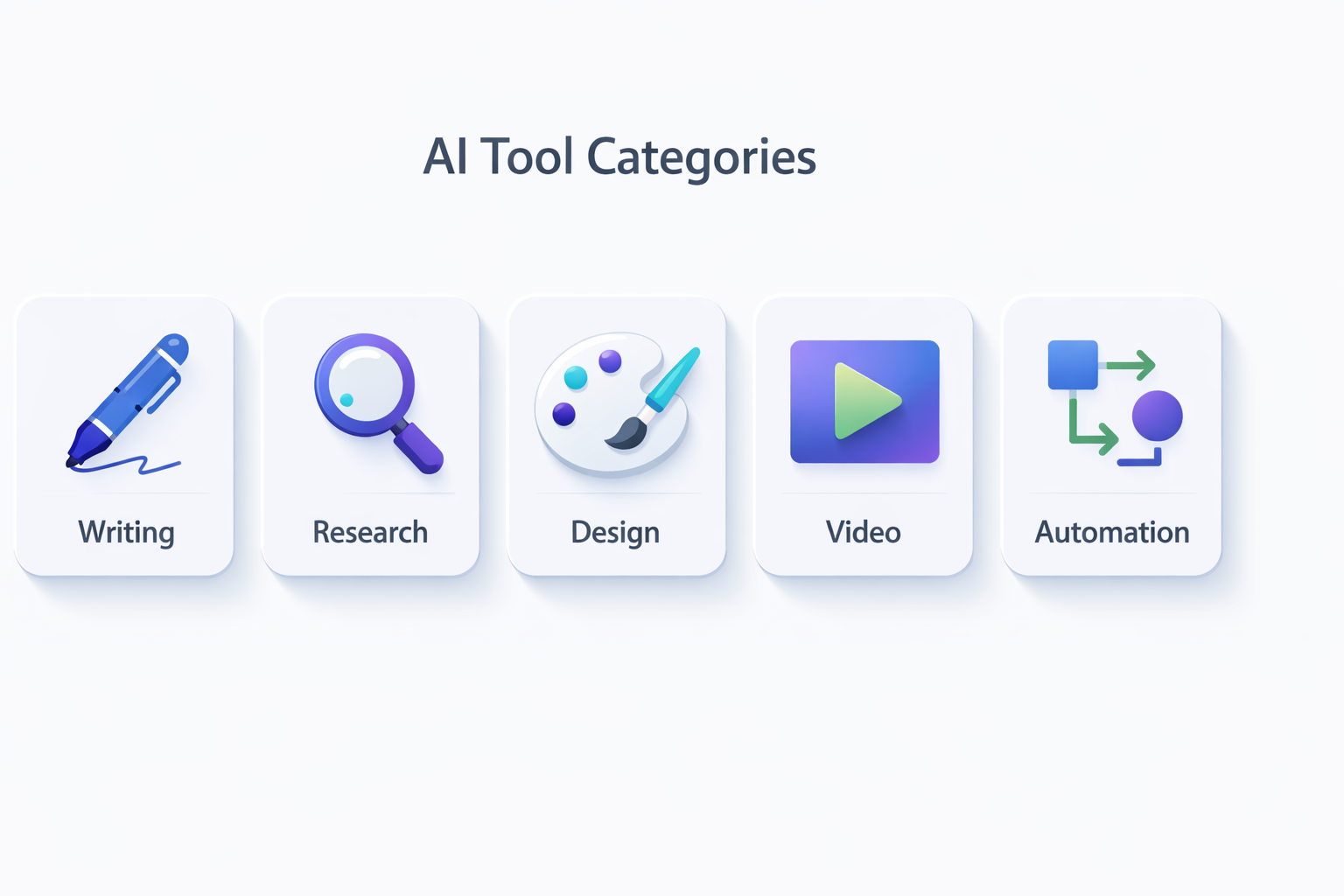
- Quick Picks: Best AI Tools by Use Case
- Comparison Table (Fast Overview)
- 1) ChatGPT
- 2) Claude
- 3) Google Gemini
- 4) Perplexity AI
- 5) Microsoft Copilot
- 6) Notion AI
- 7) Canva AI
- 8) Midjourney
- 9) CapCut AI
- 10) Zapier AI
- How to Choose the Right AI Tool
- Best Practices: How to Use AI Without Getting Bad Results
- A Simple AI Workflow That Saves Hours
- AdSense + SEO Tips
- Internal + External Links
- FAQ
- Final Thoughts
Why AI Tools Matter in 2026
AI isn’t a novelty anymore. In 2026, it’s becoming a basic skill—like using Google Docs or Excel. The most popular AI tools today don’t just generate text. They help people work faster, create better content, and automate repetitive tasks.
Used correctly, AI can help you:
- Write and edit content in minutes
- Research topics without drowning in tabs
- Create designs and videos without advanced skills
- Summarize documents and meetings instantly
- Automate workflows across apps
The best part is that you don’t need to be technical. Most tools on this list work with simple prompts and basic settings.
Quick Picks: Best AI Tools by Use Case
If you don’t have time to read the full list, here are the fastest recommendations:
- Best overall AI assistant: ChatGPT
- Best for long documents and careful writing: Claude
- Best AI search engine: Perplexity AI
- Best for Google ecosystem users: Google Gemini
- Best for Office/Windows productivity: Microsoft Copilot
- Best for notes, docs, and organization: Notion AI
- Best for design and social posts: Canva AI
- Best for high-quality AI images: Midjourney
- Best for short-form video creators: CapCut AI
- Best for automation: Zapier AI
Comparison Table (Fast Overview)
| Tool | Best For | Why It’s Popular |
|---|---|---|
| ChatGPT | All-purpose assistant | Versatile for writing, ideas, coding, planning |
| Claude | Long documents | Natural writing and strong summarization |
| Google Gemini | Google users | Great for Docs, Gmail, and quick workflows |
| Perplexity AI | Research | Fast answers with sources |
| Microsoft Copilot | Office work | Boosts productivity inside Microsoft tools |
| Notion AI | Organization | Turns notes into structured content |
| Canva AI | Design | Quick visuals for creators and marketers |
| Midjourney | AI images | High-quality visuals and style control |
| CapCut AI | Short videos | Fast edits, captions, effects |
| Zapier AI | Automation | Connects apps and automates tasks |
1- ChatGPT (Best Overall AI Assistant)
ChatGPT is still one of the most widely used AI tools in 2026 because it’s flexible. People use it for writing, brainstorming, summarizing, learning, coding, and planning.
Best use cases
- Writing blog posts, emails, scripts, and outlines
- Summarizing long text and extracting key points
- Learning concepts and getting step-by-step explanations
- Debugging code and generating templates
Practical tip
Give it context. The difference between average and excellent output is how clearly you explain what you want.
2- Claude (Best for Long Documents and Clear Writing)
Claude has become a favorite for people who work with longer documents. It handles big chunks of text smoothly and often produces writing that feels natural and well-structured.
Best use cases
- Summarizing PDFs, reports, and long articles
- Improving clarity and tone in writing
- Turning messy notes into readable content
3- Google Gemini (Best for the Google Ecosystem)
If you spend your day inside Gmail, Google Docs, or Google Sheets, Gemini is built for you. It’s especially useful for quick drafts, summaries, and productivity tasks.
Best use cases
- Summarizing emails and long threads
- Writing inside Docs faster
- Generating ideas and quick research
4- Perplexity AI (Best AI Search Engine for Research)
Perplexity is popular because it feels like “Google, but smarter.” Instead of giving you a list of links, it gives you answers with sources and follow-up questions.
Best use cases
- Researching topics quickly
- Finding sources and trusted explanations
- Comparing products, tools, and trends
5- Microsoft Copilot (Best for Office Productivity)
Copilot is widely used by professionals who live in Word, Excel, PowerPoint, and Outlook. It helps with drafts, summaries, analysis, and presentation work.
Best use cases
- Writing and rewriting professional documents
- Summarizing meeting notes and emails
- Creating PowerPoint drafts faster
- Helping with Excel formulas and analysis
6- Notion AI (Best for Notes, Docs, and Organization)
Notion AI is perfect if your work is scattered across notes, tasks, and documents. It helps you turn messy information into structured output.
Best use cases
- Turning notes into summaries and action items
- Creating outlines, SOPs, and documentation
- Organizing projects and planning content
7- Canva AI (Best for Design Without a Design Degree)
Canva’s AI tools help people create social media graphics, ads, and thumbnails quickly. It’s one of the most popular creative tools because it’s simple and fast.
Best use cases
- Social media posts and marketing creatives
- Thumbnails, banners, and simple brand designs
- Quick edits and templates for creators
8- Midjourney (Best for High-Quality AI Images)
Midjourney remains a go-to tool for high-quality AI visuals. Creators use it for concept art, branding inspiration, and unique image styles.
Best use cases
- High-quality images for creative projects
- Concept art and design inspiration
- Brand visuals and stylized illustrations
Before using any AI-generated images commercially, review the platform’s latest usage and licensing guidelines.
9- CapCut AI (Best for Short-Form Video Editing)
Short-form video is still dominating in 2026, and CapCut is one of the fastest ways to create clean edits with captions, effects, and AI features.
Best use cases
- Reels, Shorts, and TikTok editing
- Auto captions and quick cuts
- Fast mobile-first video workflows
10- Zapier AI (Best for Automation and Workflows)
Zapier helps you connect apps and automate repetitive tasks. With AI features, automations are easier to build even if you’ve never used workflows before.
Best use cases
- Automating repetitive tasks across apps
- Sending reports, notifications, and scheduled workflows
- Connecting tools like Gmail, Sheets, Slack, and more
How to Choose the Right AI Tool
Instead of downloading everything, choose tools based on your actual workflow.
- If you want a general assistant for writing and ideas, start with ChatGPT.
- If you deal with long documents, add Claude.
- If you need research with sources, use Perplexity.
- If your work lives in Google or Microsoft, pick Gemini or Copilot.
- If you create content, pair Canva or CapCut with a writing tool.
- If you want automation, add Zapier.
Best Practices: How to Use AI Without Getting Bad Results
The biggest mistake people make is using AI like a magic button. AI works best when you treat it like a smart assistant that needs direction.
1- Be specific
Instead of “write an article,” try: “Write a 900-word article for beginners, with short paragraphs, examples, and a conclusion.”
2- Give it constraints
Tell it what to avoid. For example: “No buzzwords. No filler. Keep the tone simple.”
3- Use AI for drafts, then edit like a human
The best creators don’t publish raw AI output. They use it to speed up the first version, then refine it.
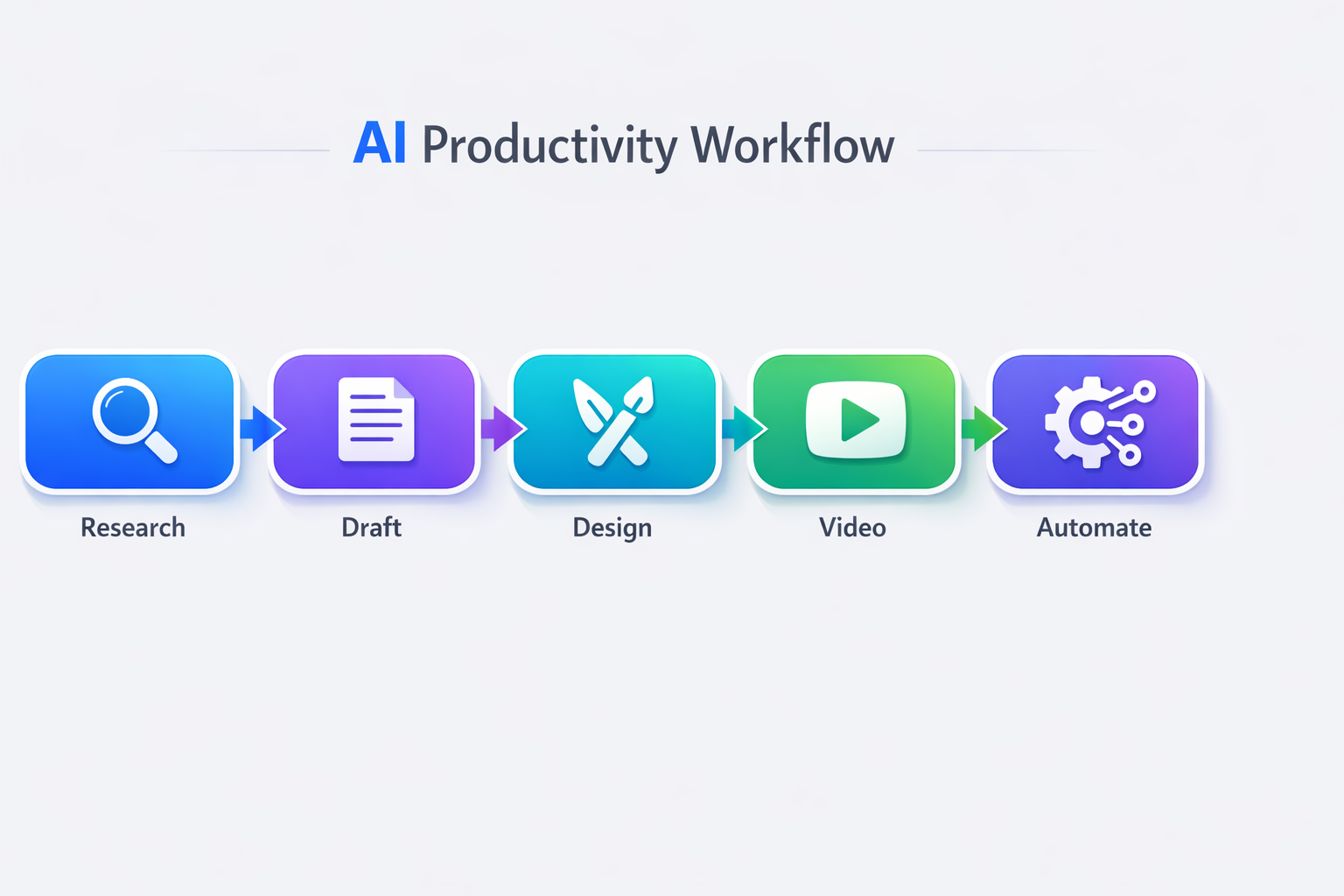
A Simple AI Workflow That Saves Hours
- Research: Use Perplexity to get a fast overview and sources.
- Draft: Use ChatGPT or Claude to write the first version.
- Design: Use Canva for visuals, thumbnails, or graphics.
- Video: Use CapCut to turn the idea into a short clip.
- Automate: Use Zapier to share, organize, or publish workflows.
AdSense + SEO Tips
If you want this article to rank and earn, structure matters. These changes usually improve both SEO and AdSense performance:
- Use short paragraphs and clear subheadings.
- Add a comparison table early (it improves time on page).
- Use internal links to keep readers exploring your site.
- Add at least one original image or screenshot.
- Update this post every few months to keep it fresh.
Internal + External Links
Internal links (published posts from ViralHub)
- 7 Free AI Tools That Feel Illegal to Use in 2025
- 10 Best Free AI Tools Nobody Is Talking About (Yet)
- 17 Best AI Tools for Content Creators (Save 10+ Hours/Week)
- 7 Powerful Ways AI Is Changing Everyday Life (2026)
External links (authority resources)
FAQ
What are the best AI tools in 2026?
Some of the best AI tools in 2026 include ChatGPT, Claude, Google Gemini, Perplexity AI, Microsoft Copilot, Notion AI, Canva AI, Midjourney, CapCut AI, and Zapier AI.
Are AI tools free?
Many AI tools offer free plans, but advanced features often require a subscription. The free versions are usually enough to test whether the tool fits your workflow.
Which AI tool is best for productivity?
ChatGPT is the best all-purpose productivity tool for most users. Notion AI helps with organization, and Zapier helps automate repetitive tasks.
How do I get better results from AI tools?
Be specific, add context, and treat AI output like a draft. The best results come from editing and refining the final version.
Final Thoughts
Most people don’t need ten AI tools. They need two or three that fit their daily work. Start with one writing assistant, one research tool, and one creator tool, then expand only when you feel a real need.
If you want a simple next step, pick one tool from this list and use it consistently for a week. That’s usually enough to understand whether it’s a real upgrade—or just another app you’ll forget about.