
Artificial Intelligence used to feel like something far away — robots, sci-fi movies, and “future technology.” But here’s the truth: How AI Is Changing Everyday Life isn’t a prediction anymore. It’s already happening quietly in the background of your daily routine.
And the most interesting part? How AI Is Changing Everyday Life often happens without any “AI label” on the screen. It’s built into the apps, devices, and services you already use every day.
Have you ever wondered why your phone camera makes your photos look better than real life? Or why Netflix seems to know what you’ll watch next? Or how your bank blocks suspicious payments before you even notice? That’s AI doing its job — often without asking for credit.
In this guide, we’ll break down what AI really is, where it shows up daily, the benefits, the risks, how it affects jobs, and how you can use it smarter (and safer).
Table of Contents
- What Is Artificial Intelligence?
- How AI Works (Simple Explanation)
- How AI Is Changing Everyday Life: Everyday Examples You Use Without Noticing
- Benefits of AI in Daily Life
- Risks and Ethical Concerns
- How AI Is Changing Work and Jobs
- Quick Checklist: How to Use AI Smarter
- The Future of AI
- Internal & External Links
- Frequently Asked Questions (FAQ)
- Final Thoughts
What Is Artificial Intelligence?
Artificial Intelligence (AI) refers to computer systems designed to perform tasks that normally require human intelligence. That includes things like understanding language, recognizing images, making predictions, and detecting patterns in large datasets.
Unlike traditional software that follows strict rules, AI systems can learn from data and improve over time. This learning ability is what makes AI especially useful for personalization, automation, and recommendation systems.
Quick takeaway: AI isn’t magic. Most of the time it’s a system trained to recognize patterns and make predictions based on what it has seen before.
How AI Works (Simple Explanation)
Most modern AI uses machine learning. That means the system learns from examples instead of being programmed step-by-step for every scenario.
Here’s the simplest way to understand it:
- AI is trained using real data (text, images, numbers, behavior).
- It learns patterns from that data.
- It uses those patterns to make predictions or recommendations.
The 3 building blocks behind AI
- Data: examples used to train and evaluate the model.
- Models & algorithms: systems that learn patterns and relationships.
- Computing power: hardware that processes complex learning efficiently.
Tip: If an app gets better the more you use it — especially recommendations — AI is usually involved.
How AI Is Changing Everyday Life: Everyday Examples You Use Without Noticing
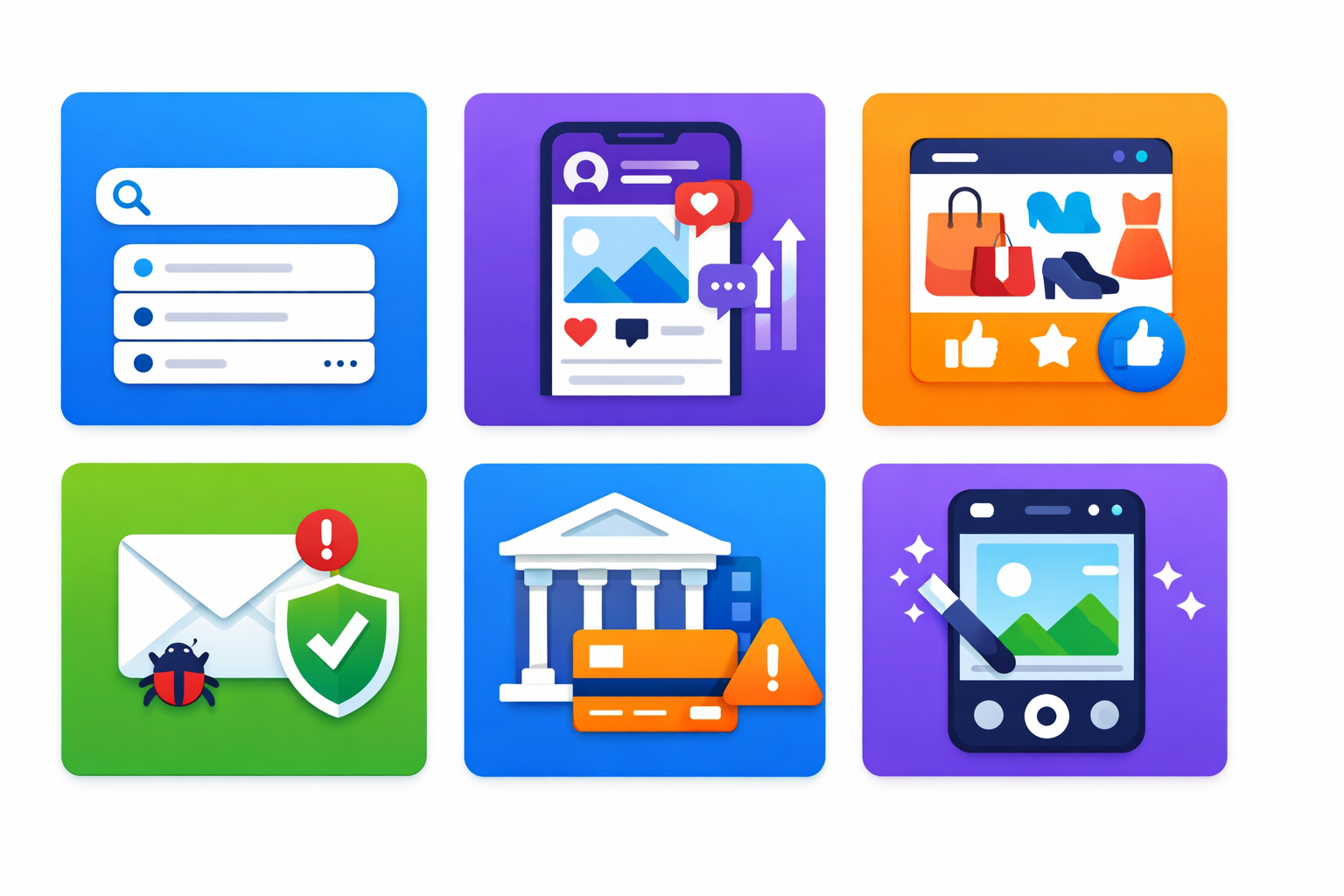
AI often works best when it feels invisible. Many people experience How AI Is Changing Everyday Life without ever calling it “AI.” Here are the most common examples:
1) Search autocomplete
Ever typed into Google and saw suggestions before finishing your sentence? That’s AI predicting your query based on behavior, trends, and search intent.
2) Social media feeds
Instagram, TikTok, Facebook, and YouTube all use AI to rank posts. What you see isn’t random — AI chooses it based on your engagement.
- What you like
- What you pause on
- What you comment on
- What you share
Rhetorical question: Ever wondered why one post goes viral while another disappears? The algorithm decides.
3) Shopping recommendations
Online stores use AI to suggest products you’re likely to buy next. “Frequently bought together” is usually AI-powered pattern recognition.
4) Email spam filtering
Spam filters are one of the best quiet uses of AI. They detect phishing, suspicious links, and common scam patterns — often saving you from opening dangerous emails.
5) Fraud detection in banking apps
Banks use AI to detect unusual spending. If your card gets blocked unexpectedly, it might be frustrating — but it could be AI preventing fraud.
6) Phone cameras
Your phone doesn’t just take photos. It enhances them. AI improves lighting, sharpens faces, removes noise, and detects scenes automatically.
So yes… your photo skills might be partially AI.
Benefits of AI in Daily Life
When used responsibly, AI can make daily life faster, easier, and safer. This is one reason How AI Is Changing Everyday Life feels so natural — because the improvements often happen quietly in the background.
- Efficiency: automates repetitive tasks and saves time.
- Accuracy: improves detection and prediction in important areas.
- Personalization: creates tailored recommendations and experiences.
- Accessibility: supports translation, captions, and assistive features.
- Convenience: reduces decision fatigue and simplifies tasks.
Where AI helps the most
AI improves everyday tools in areas like:
- Productivity (writing, planning, summarizing)
- Education (personalized learning support)
- Security (fraud detection + scam prevention)
- Customer support (faster answers)
Reality check: AI doesn’t replace effort — it reduces wasted effort.
Risks and Ethical Concerns
While How AI Is Changing Everyday Life has many benefits, it also introduces real concerns — especially around privacy, bias, and security.
1) Privacy
Many AI systems rely on tracking behavior to personalize results. That means privacy depends on the platform’s policies and your settings.
Actionable tip: Before using any AI tool, ask yourself: What data is it collecting?
2) Bias
AI learns from real-world data — and real-world data can contain unfair patterns. This can lead to biased results in sensitive areas like hiring, loans, and healthcare.
3) Transparency
Many AI systems are “black boxes,” meaning it’s hard to know why they made a decision. That becomes risky in high-stakes situations.
4) Security (deepfakes & scams)
AI can generate fake voices, videos, and images. This makes scams more believable than ever.
Safety rule: Be cautious of urgent messages that trigger fear, emotions, or pressure to send money quickly.
How AI Is Changing Work and Jobs
Another major way How AI Is Changing Everyday Life is through work. AI is shifting tasks, workflows, and even the skills people need to stay competitive.
- It automates routine tasks.
- It creates new roles and increases demand for AI-assisted skills.
Jobs most likely to change first
- Repetitive predictable workflows
- Routine data tasks and reporting
- First-line support for common questions
Skills that remain valuable
AI struggles with human-level judgment, empathy, leadership, and creativity. That’s why humans remain essential.
The future isn’t “AI replacing people.” It’s people who use AI replacing people who don’t.
Quick Checklist: How to Use AI Smarter
If you want the benefits without the risks, start here:
- Verify important facts — don’t trust AI blindly.
- Avoid sharing sensitive data like passwords, IDs, or private documents.
- Use AI as a helper, not the final decision-maker.
- Watch out for deepfakes and suspicious urgent messages.
- Adjust privacy settings when possible.
The Future of AI
The next generation of AI will feel less like a separate tool and more like a built-in assistant across devices and services.
Expect improvements in:
- Personal assistants: planning, writing, and organization.
- Education: personalized learning and instant feedback.
- Accessibility: real-time captions, translation, and assistive support.
- Healthcare support: smarter triage and early detection (with safeguards).
Prediction: AI won’t disappear — it will become standard, like Wi-Fi or smartphones.
Internal & External Links
Internal links (from this site)
- 17 Best AI Tools for Content Creators (Save 10+ Hours a Week)
- 10 Best Free AI Tools Nobody Is Talking About (2025)
- 7 Free AI Tools That Feel Illegal to Use in 2025
- 7 Powerful Ways Artificial Intelligence Is Quietly Changing Your Life in 2025
- Most People Ignore These 5 Cyber Security Mistakes — Until It’s Too Late
- 7 Warning Signs Your Personal Data Is Exposed Online (And How to Secure Your Accounts Fast)
External links (authority sources)
- OpenAI (AI research and tools)
- Google Search Central Documentation
- OWASP Security Resources
- NIST AI Risk Management Framework
Frequently Asked Questions (FAQ)
Is AI dangerous?
AI can be risky when misused or deployed without oversight. The technology itself is neutral — the danger depends on controls, transparency, and responsible design.
Can AI think like humans?
No. AI can generate outputs that look intelligent, but it doesn’t have consciousness, emotions, or real understanding.
Will AI replace humans completely?
In most fields, AI is more likely to reshape jobs than replace people entirely. Many roles will evolve into AI-assisted workflows.
How can I use AI safely?
Avoid sharing sensitive information, verify facts, and treat AI as a tool — not an authority.
Final Thoughts
How AI Is Changing Everyday Life isn’t a future trend — it’s today’s reality. And the more you understand it, the more confident you’ll be using it.
AI helps you search faster, shop smarter, stay safer online, take better photos, and save time. But it also raises concerns about privacy, bias, and misinformation.
The best approach is balance: enjoy the convenience, but stay mindful of the risks. Once you start noticing How AI Is Changing Everyday Life, you’ll use it with more confidence and control.
Next step: Explore AI tools carefully, improve your digital safety habits, and keep learning — because AI will only become more common from here.